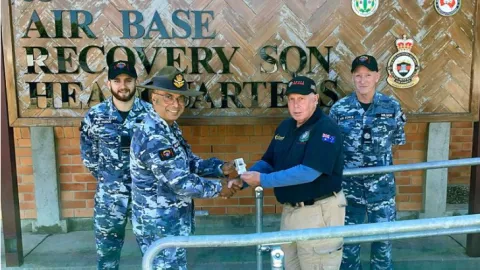
Image courtesy of Defence: David Humphry receives his Veteran Defence Common Access Card from Squadron Leader Lancelot Monteiro, alongside Flying Officer Reece Jansen, left, and Warrant Officer Wayne Wilson, right.
Defence has introduced the Veteran Defence Common Access Card (DCAC), a new initiative supporting Recommendation 82 of the Royal Commission into Defence and Veteran Suicide by helping eligible veterans maintain their connection to the Defence community after leaving service.
The Veteran DCAC provides eligible former Australian Defence Force (ADF) members with continued access to designated Defence establishments for up to two years after separation, enabling them to stay connected with former colleagues, participate in approved social activities and maintain important community relationships during transition to civilian life. Research and lived experience consistently demonstrate that social connection, community participation, and a sense of belonging are key contributors to wellbeing. For many veterans, leaving Defence can involve significant change as military identity, friendships and daily routines shift. The Veteran DCAC has been introduced to maintain these important connections during this period of transition.
Who is eligible?
The Veteran DCAC is available to former ADF members who:
- Have fully separated from all Service Categories (SERCATs)
- Are no longer providing ongoing Defence service or employment
- Are assessed as suitable to hold unescorted access to designated areas of Defence establishments.
The initiative includes veterans who have separated through:
- Medical separation
- Reaching compulsory retirement age, or
- Voluntary separation, where policy conditions are met.
Members who transfer to another Service Category, including part-time Reserve service, remain eligible for a standard ADF DCAC under existing Defence policy and are therefore not eligible for a Veteran DCAC.
Supporting wellbeing through connection
Maintaining strong social networks following military service can play a key role in supporting long-term wellbeing and successful transition outcomes. By providing continued access to Defence bases for approved social purposes, the Veteran DCAC helps veterans remain connected with the communities and support networks that have been an important part of service.
This initiative aligns closely with the work of the Veteran and Family Wellbeing Agency, which focuses on strengthening prevention and early intervention, supporting positive transitions from ADF service, and connecting veterans and families of veterans with the information, services, supports, and the community connections they need to thrive.
For more information about the Veteran DCAC initiative, read the full Defence article here or contact segservicedelivery.esdaccesscontrol@defence.gov.au for more information.