Support for carers

A person in a wheelchair sitting at a kitchen table while another person stands behind with arms around their shoulders.

Supporting carers is an important part of supporting the wellbeing of veterans and families. 

Carers support veterans and family members through illness, injury, disability, ageing and major life changes. Caring can be rewarding, but it can also affect your health, time, work and wellbeing.  

Supporting carers is an important part of supporting the wellbeing of veterans and families. 

Who can be a carer  

A carer may be a:  

  • Partner or spouse  
  • Parent or adult child  
  • Other family member or friend  

Some carers provide help from time to time. Others provide care every day. Many people do not think of themselves as carers at first and may see it as simply helping someone they care about.  

How caring can affect wellbeing  

Caring responsibilities can affect many parts of life, including:  

  • Physical and mental health  
  • Work, study and financial stability  
  • Social connection and relationships  
  • Time for rest, recovery and personal needs   

These effects can build up over time, especially when caring is combined with work, parenting or your own health needs.  

Support available for carers   

Support for carers can look different depending on your needs. It may include:  

  • Practical help with daily tasks or caring responsibilities  
  • Respite care, to allow time to rest or recover  
  • Emotional or mental health support  
  • Help navigating services, systems and support options  
  • Peer or community support from others in caring roles  
  • Information to support planning and decision-making  

The right support can make caring easier to manage over time.   

Support in Australia  

In Australia, carers may be able to access support through Carer Gateway. This can include counselling, coaching, peer support, practical help, tailored support packages, and planned or emergency respite.  

Some carers may also be eligible for financial support through Services Australia, such as Carer Payment, Carer Allowance or Carer Supplement. Young carers may also be able to access help with education through the Young Carer Bursary Program.  

Eligibility varies, so it can help to check what is available in your area and what you or the person you care for may qualify for.  

Local support may also be available through state and territory carer organisations, community health services, neighbourhood or community centres, local councils, and respite or peer support groups.   

Support for carers of veterans and families of veterans  

In veteran and family life, caring may relate to service-related injury, illness, trauma, disability or ageing. It may also happen during periods of transition, change or loss.  

DVA may be able to support eligible veterans and carers through respite care, including in-home respite, residential respite and emergency short-term home relief. Open Arms also provides free and confidential counselling and wellbeing support for veterans and families of veterans.  

Looking after yourself  

Looking after someone else does not mean ignoring your own wellbeing. Getting support early can help reduce stress and prevent you from becoming too exhausted or overwhelmed.    

Looking after yourself is part of caring well.  

Where to start  

If you are providing care, these steps may help:  

  • Exploring carer support and respite options  
  • Talking with a health or wellbeing professional  
  • Seeking emotional or counselling support  
  • Connecting with peer or carer networks  
  • Asking for help to navigate services or plan next steps  

You do not have to manage everything on your own. Support is available to help you care for others and look after yourself.  

Factsheet
  • Financial Wellbeing
  • Social Support and Connection
  • Health and Wellbeing
  • Family, Children and Caring
Off
8
9
10
12

Children

Two young children sitting outdoors in a park, blowing bubbles.

Children’s wellbeing is shaped by their health, relationships, learning, sense of identity, and access to everyday essentials 

Children’s wellbeing is shaped by their health, relationships, learning, sense of identity, and access to everyday essentials. For veterans and families of veterans, children may experience changes such as relocation, family transitions, or the effects of service-related injury or illness.  

Support is available to help children feel safe, connected and supported as they grow.   

Children’s wellbeing  

Children’s wellbeing includes all the things they need to grow, develop and feel supported. This includes:  

  • Good physical, emotional and mental health  
  • Feeling safe, loved and supported at home, at school and in the community  
  • Stable housing, enough food, suitable clothing and access to services  
  • Opportunities to learn, play and build skills  
  • Being included, listened to and able to take part in daily life  
  • A positive sense of identity, culture and belonging  

Children may show stress or worry in different ways depending on their age and stage of development.  

What helps children’s wellbeing  

Children are more likely to do well when they have caring relationships, steady routines, time to learn and play, and a strong sense of belonging. Extra support during times of change can also help children feel more secure.   

Signs a child may need extra support   

A child may need extra support if you notice ongoing changes in sleep, eating, behaviour, learning, mood or relationships. Some children may become quieter, more withdrawn, more worried, or complain more often about headaches, stomach aches or other physical symptoms.  

When children may need extra support  

Children may need extra support during times of change, such as:  

  • Transitioning into or out of Defence service  
  • Moving home, starting childcare or changing schools  
  • Family illness, injury or disability  
  • Changes in family roles, routines or caring responsibilities  
  • Emotional distress, anxiety or behaviour changes  

Noticing these changes early and getting support can help children adjust and feel safer.   

Children and young people at different stages  

Children and young people need different kinds of support as they grow. This may include support in early childhood, during school years, in adolescence and young adulthood, and during key life changes or periods of uncertainty.  

How parents and carers can help  

Small, everyday actions can help children feel safe and supported.  

  • Keep routines as steady as possible, especially during times of change  
  • Make time to talk, listen and notice how your child is coping  
  • Support regular sleep, meals, play, learning and time with trusted people  
  • Help children name and understand their feelings in ways that suit their age  
  • Stay in contact with childcare, school or other supports if you have concerns  
  • Seek help early if changes in behaviour, mood or wellbeing continue  

Getting support  

If you are concerned about a child’s wellbeing, you can ask for help from trusted people, services and community supports.  

  • Talk to a GP, counsellor or other health professional  
  • Speak with childcare, school or education supports  
  • Use family, parenting or community support services  
  • Contact specialist services if more help is needed   

You do not have to wait until concerns become serious. Early support can make it easier to respond to a child’s needs and find the right help.  

Helpful resources  

These services may help children, young people, parents, carers and families find support.  

For children and young people 
  • Kids Helpline: Free, confidential 24/7 support for children and young people aged 5 to 25.  
  • Headspace: Mental health and wellbeing support for young people aged 12 to 25, with support for families and carers.  
For parents and carers 
  • Raising Children Network: Free, expert-backed Australian parenting information on child development, wellbeing and family support.  
  • Emerging Minds: Information and resources to support children’s mental health and emotional wellbeing, including resources for families.  
  • Parentline: Parenting advice and support services are available across Australia.  
  • Healthdirect: Trusted Australian health information and advice to help families find the right health support.  
For veterans and families of veterans 
  • Open Arms – Veterans & Families Counselling:  provides free and confidential mental health and wellbeing support including families and couples counselling, care coordination, peer support, group programs, digital health initiatives and 24-hour crisis support for veterans and the families of veterans.  
Urgent help

Reference note: This page is informed by ARACY’s The Nest, a national framework for child and youth wellbeing in Australia. 

Factsheet
  • Social Support and Connection
  • Health and Wellbeing
  • Family, Children and Caring
On
12

Veteran Transition Strategy and Action Plan

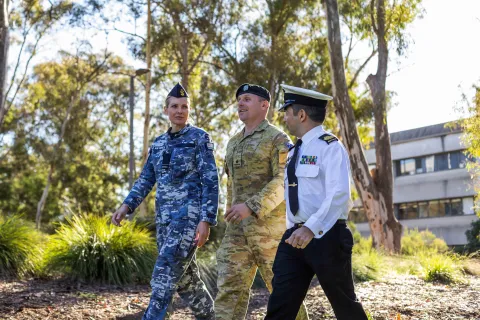
Three people in different Australian Defence Force uniforms walking side by side in a park.

The Veteran Transition Strategy helps Commonwealth agencies work together so support is more connected for veterans and families. 

Moving from the ADF to civilian life can involve many organisations and services. 

The Veteran Transition Strategy and Action Plan helps Commonwealth agencies work together so that support is more connected for veterans and families. 

Transition is not only about work or paperwork. It can also affect health, well-being, family life, identity, housing, finances and community connection. 

Better coordination can make it easier to get the right support at the right time. It can also reduce the stress of dealing with different systems on your own. 

How this helps veterans and families 

By working together across government, the Veteran Transition Strategy and Action Plan aim to make it easier for veterans and families to: 

  • find the right support at the right time 
  • tell their story fewer times 
  • move between Defence and civilian systems with clearer pathways 
  • have more confidence that agencies are working together on their behalf. 

Why joined-up support helps 

The Royal Commission into Defence and Veteran Suicide highlighted that transition can be a higher-risk time. 

This is especially true when people face loss of identity, trouble finding civilian work, social disconnection, or complex mental health and wellbeing needs. 

It also highlighted the value of early, coordinated support after separation. Joined-up services can reduce fragmentation and make it easier to respond to different needs together. 

Read the full Veteran Transition Strategy and Action Plan for more information 

Factsheet
  • Employment and Meaningful Activity
  • Meaning and Spirituality
  • Social Support and Connection
  • Health and Wellbeing
  • Family, Children and Caring
Off
7

Budgeting skills and tools

Close-up of a person writing in a notebook with a pen at a desk, with a calculator and laptop nearby.

Learning a few budgeting skills can help you feel more confident and more in control of everyday money. 

Managing money can feel harder during times of change, such as leaving the ADF, changes in income, health problems or family stress. Learning a few budgeting skills can help you feel more confident and more in control of everyday money. 

Budgeting does not have to be perfect. It can help you see where your money is going and make small changes that feel manageable. 

Why budgeting can help 

A simple budget can help you: 

  • keep track of income and expenses 
  • plan for regular bills and unexpected costs 
  • reduce financial stress 
  • make choices about spending and saving 
  • feel more confident managing money when life changes 

Budgeting tools you can use 

There are free, easy-to-use budgeting tools that can help you get started. 

MoneySmart is an Australian Government resource run by ASIC. It includes a budget planner, calculators and practical information about money, debt and bills. 

  • a free online budget planner 
  • calculators and practical money tools 
  • plain English help with money, debt and bills 

You can use the MoneySmart Budget Planner to work out where your money is going and build a simple budget that suits your situation. 

Support during transition or money changes 

Support is available if your money situation has changed because you left the ADF, cannot work as much, or your household income has changed. 

The Department of Veterans’ Affairs has information to help veterans and families manage money after service, including budgeting, income changes and financial support.   

You can read more about sorting your finances on their website. 

You do not have to deal with money stress on your own, especially during transition. 

Financial counselling and extra support 

If budgeting feels too hard or you are under money pressure, free and confidential financial counselling is available. 

Bravery Trust financial counselling 

Bravery Trust offers free, independent, confidential, veteran-specific financial counselling for current and former ADF members and their families. Financial counsellors can help you: 

  • understand your financial situation 
  • work out which debts and bills to pay first 
  • make a money plan that works for you 
  • talk through options and next steps 

You can contact Bravery Trust financial counselling for support.   

Services Australia 

Services Australia’s Simple money manager can help you review or create a budget. It is available in multiple languages and includes audio support. 

Services Australia’s Financial Information Service is a free service that can help you understand financial matters and make informed decisions. 

More budgeting tools and support 

National Debt Helpline offers free, confidential and independent financial counselling if you need help with debt, bills or money stress. 

MoneySmart’s Savings goals calculator can help you set a savings goal, work out how much to save and estimate how long it may take to reach your goal. 

Factsheet
  • Financial Wellbeing
  • Family, Children and Caring
Off
9
12

Body movement

Two people using outdoor exercise equipment in a park setting.

You do not need to do hard or highly planned exercise to get benefits.

Regular movement can support your physical and mental health. Life changes such as changing jobs, growing your family or leaving military service can affect your routine and make it harder to stay active. Finding simple ways to move in a way that suits you can help you build routine, stay connected and support your wellbeing.  

Movement does not have to look the same as it did during service. Even small amounts of regular activity can help.  

Tips for staying active  

Start where you are  

You do not need to do hard or highly planned exercise to get benefits. Walking, stretching, gardening or light exercise can all help. Starting small can help you build up over time. Any movement is better than none.  

Build movement into daily life  

Try to build movement into your day. You could walk part of the way to an appointment, do jobs around the house or choose an active hobby. This can help you keep moving when your routine is changing.   

Find activities you enjoy  

You are more likely to keep moving if you enjoy what you do. This could include:  

  • Team sports or group activities  
  • Individual exercise  
  • Outdoor activities  
  • Fun activities that match your interests, what feels manageable for you, and your energy levels  

If you enjoy an activity, you are more likely to keep doing it.  

Use movement to support mental wellbeing  

Regular movement can help your mood, lower stress and improve sleep. It can also help you feel less alone by giving you routine, a sense of progress and chances to connect with other people.  

Stay connected through movement  

Group activities, sports clubs and community exercise programs can support your physical health and help you stay connected with others. Many veterans find that sport or recreation helps them feel part of something and gives them a sense of purpose during transition.  

There may also be programs for veterans in your area.   

Know how much movement is recommended for your age group  

What your body needs can change depending on your age. Your needs can also be different during pregnancy.  

Australia’s 24-hour movement guidelines can help you understand what is recommended for your age group.  

These guidelines cover:  

  • how much physical activity you should do each day  
  • ideas to fit more physical activity into your daily life  
  • the importance of reducing and breaking up the time you spend sitting or lying down when not sleeping  
  • how much sedentary screen time is recommended  
  • how much sleep people should get  
  • how people can get good quality sleep.  

Check in with a health professional if needed  

If you have an injury, a health condition, or have not been active for a while, a GP or allied health professional can help you find safe ways to move. They can also give advice about pacing yourself, managing injuries and choosing exercise that suits you.   

Helpful resources  

Factsheet
  • Social Support and Connection
  • Health and Wellbeing
Off
8
9
12

Applying for a rental

A person sitting at a table writing in a notebook, with a laptop nearby.

Renting in Australia can feel easier when you understand the process. 

Renting in Australia can feel easier when you understand the process, especially if you are moving to a new area.  

Finding a rental can be hard. Veterans and families of veterans may also be adjusting to things such as changes in income and limited work or rental history after leaving the Australian Defence Force (ADF). Being prepared, organised and quick to respond can help you put in a stronger application.   

Top tips for applying for a rental property  

Get your paperwork ready  

Try to gather these documents before you start applying:  

  • Photo identification  
  • Proof of income (such as payslips or an employment contract)  
  • Rental and/or personal references that are current and easily contactable  

If you have lived in a Defence Housing Australia (DHA) property, DHA may be able to give you a rental reference. You can check the Defence Housing Australia website for more information.   

If you do not have a recent rental history   

If you do not have a recent civilian rental history, you can still support your application with:  

  • A DHA rental reference, if this applies to you  
  • Character references from past supervisors or commanding officers  
  • Proof of steady income, savings or ongoing work  
  • A short explanation of your Defence service and posting history  

Clear information can help the property manager understand your situation.  

Start your search early  

Start looking for properties six to eight weeks before you want to move.  

Starting early gives you time to:  

  • Watch the local rental market  
  • Attend inspections  
  • Apply for more than one property if you need to  

Plan for upfront rental costs  

When you plan your budget, remember that getting a rental usually means paying:  

  • A bond, often up to four weeks of rent  
  • Rent in advance, often two weeks  

Planning for these costs early can help reduce money stress when you are offered a property.  

Follow application instructions carefully  

Each rental listing may ask you to apply through a different online platform or website.  

Make sure you:  

  • Follow the instructions on the listing  
  • Complete all required fields  
  • Upload the documents requested  

If you have trouble with the application, contact the real estate agent or property manager for help.   

Attend inspections  

In many states and territories, you need to attend an inspection before you can be considered for a rental. An inspection is also your chance to:  

  • Check the layout and size  
  • Look for maintenance problems  
  • Decide if the property is right for you  

Try to arrive on time because inspections are often short.  

Dress neatly  

 There is no formal dress code, but dressing neatly can help you make a good impression and show that you are serious about the property.  

Communicate promptly  

Prompt communication can help in a competitive rental market.  

  • Submit your application as early as possible  
  • Reply quickly to calls or emails from agents  
  • Make sure your referees are ready to respond if an agent contacts them  

Know your rights and responsibilities   

Each state and territory in Australia has its own rental laws. These laws explain the rights and responsibilities of tenants, property managers and property owners.  

Rental laws also protect people from unlawful discrimination. If you are not sure whether a rental decision was fair or lawful, your state or territory tenancy authority may be able to help.  

The links below take you to official renting information for each state and territory.  

State and territory renting information  

  • Australian Capital Territory (ACT): Read more  here.  
  • New South Wales (NSW) Read more here.  
  • Northern Territory (NT) Read more here.   
  • Queensland (QLD) Read more here.  
  • South Australia (SA) Read more here.  
  • Tasmania (TAS) Read more here.  
  • Victoria (VIC) Read more here.  
  • Western Australia (WA) Read more here.  
Factsheet
  • Financial Wellbeing
  • Housing
  • Family, Children and Caring
Off
7
9
12

Applying for a Medicare card

A person sitting on a sofa indoors with a laptop, looking towards a window with natural light.

When you transition from the ADF to civilian life, it is important to have a Medicare card.  

When you transition from the Australian Defence Force (ADF) to civilian life, it is important to have a Medicare card. It helps you access Australia’s public health system.  

After you leave Defence, Medicare becomes your main way to access subsidised medical services, including:  

  • GP (doctor) visits  
  • Public hospital treatment  
  • Some prescription medicines  

Even if you hold a Department of Veterans’ Affairs (DVA) Veteran Card, you may still need Medicare for health care that is not covered by DVA.  

What enrolling in Medicare means  

To get a Medicare card, you need to enrol in Medicare.  This is the official term Services Australia uses for applying for and receiving a Medicare card.  

When to apply  

You should apply for Medicare before leaving the ADF, or as soon as possible after discharge.  

Applying early helps reduce the risk of a gap in your access to health care once Defence health services end.  

How to apply  

You can enrol in Medicare in one of the following ways:  

  • Online through myGov  
    This is the quickest option and allows you to track the progress of your application.  
  • Using a Medicare enrolment form  
    This option is available if you are unable to apply online.   

What you will need  

When you apply, you will need to provide proof of identity and Australian residency, such as:  

  • An Australian passport  
  • A birth certificate  

You can enrol:  

  • As an individual  
  • Include eligible family members on the same Medicare card.  

Helpful links  

Factsheet
  • Health and Wellbeing
  • Family, Children and Caring
Off
7