The Veterans' and Families’ Centre (Burnie)

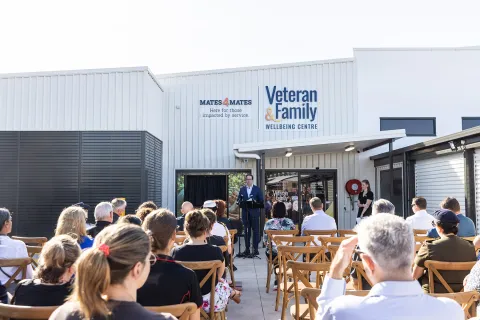
The Veterans’ and Families’ Centre (Burnie) provides locally based, community-focused support for current and former Australian Defence Force members and their families across North-West Tasmania.

Welcome to the Hub 

The Veteran’s and Families’ Centre (Burnie) is a community-based organisation dedicated to supporting the welfare, wellbeing and dignity of veterans and their families across Tasmania’s north-west region.  

Operated by the North-West Tasmanian Veteran Welfare Board (NWTWB) and co-funded through the Australian Government’s Veterans’ and Families’ Hub program the Centre offers a welcoming environment where veterans and families can access service navigation, wellbeing support, advocacy and opportunities for social connection.  

 Through partnerships with ex-service organisations, health providers, community groups and government agencies, the Centre helps improve access to coordinated support and specialist services. 

Servicing a large regional area, the Centre delivers support through onsite services, telehealth options and outreach across North-West Tasmania. It operates as a trusted single point of access, helping veterans and families identify suitable support pathways and connect with the services they need. 

On Site Supports 

• General Practitioner services, including onsite, telehealth and outreach appointments 
• Mental health, wellbeing and crisis support 
• Advocacy services 
• Gym facilities 
• Walking groups and Invictus Park Run 
• E-bike hire for veterans and families 
• Coffee, book and gardening clubs 
• Community events 
• School holiday activities 
• Library and information facilities 
• Outreach services across North-West Tasmania 
• Cam's Corner – a calm and welcoming space dedicated to the memory of Cameron Baird VC  

The Centre can also help connect you with 

• Counselling services 
• Employment services 
• Education and training opportunities 
• Housing support services 
• Financial advice services 
• Specialist health and wellbeing services 

How to find us 

The Hub  
Address: Suite 5-10 Marine Terrace Burnie TAS 7320 

Opening Hours: Monday to Friday 9:00am to 5:00pm
Phone (03) 6454 1899 

Accessibility: The Hub is wheelchair accessible

Contact Us - The Veteran & Family Centre 

Email: theveteransandfamiliescentre@gmail.com 

Factsheet
  • Social Support and Connection
  • Health and Wellbeing
  • Family, Children and Caring
Off
7
8
9
10
12
104

Queanbeyan Veteran and Family Hub

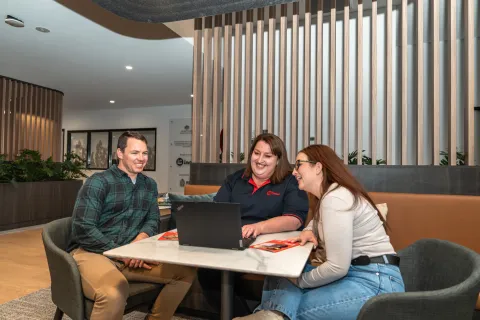
Three people seated at a table inside the Queanbeyan Veteran and Family Hub, looking at a laptop together.

The Queanbeyan Veteran and Family Hub is a welcoming space where veterans and their families can easily access support, connection, and guidance.

Welcome to the Hub 

RSL LifeCare Limited is an Australian not‑for‑profit organisation committed to supporting current Australian Defence Force (ADF) members, veterans, and their families at every stage of life. Its services span four key areas: veteran services, residential aged care, retirement living, and home care. 
 
RSL Lifecare in partnership with federal government grant funding have developed a Veterans’ and Families’ Hub network including the Queanbeyan Veteran and Family Hub. This hub offers a welcoming central point of access to coordinated, non‑clinical services including DVA claims support and advocacy, employment and transition assistance and social connection activities. 

A holistic approach to supporting veterans and families of veterans  

The Queanbeyan Veteran and Family Hub provide a coordinated, whole-of-person approach to support—helping veterans and families of veterans strengthen their financial wellbeing, mental health, and physical wellbeing in one place. 

At the Hub, you can access personalised wellbeing support tailored to individual needs, including practical assistance and guidance to help you navigate life’s challenges.  
Our on-site services bring together a range of supports in one welcoming location, making it easier to access the help you need, when you need it. 

What’s available to you  

  • Advocacy support is available to help with DVA claims and entitlements, ensuring you understand your options and feel confident in the process. 
  • a range of regular activities, events, and community programs, we help you build social connections, reduce isolation, and stay engaged with others who understand your experiences. 
  • Wellbeing support including financial assistance and support coordination  

Through RSL Lifecare, we can help connect you to:  

  • The RSL Employment Program for employment assistance and resources to help you transition into or progress within the workforce. 
  • Referrals for homelessness and housing support through Homes for Heros and subsidised rental assistance through the Rent Choice Veteran Program  
  • Open Arms Outreach and mental health supports  

How to find us   

Address: Level 1, 251 Crawford Street, Queanbeyan NSW 2620

Opening Hours: Monday to Friday 9:00am to 5:00pm

Phone: (02) 6263 9570

Website: Queanbeyan Veteran and Family Hub - RSL LifeCare

Email: queanbeyanvfh@rsllifecare.org.au 

The Hub is wheelchair accessible.

The Queanbeyan Veteran and Family Hub’s social connection and community programs are advertised through the events and activities page and social media: Queanbeyan Veteran and Family Hub Events & Activities 

Factsheet
  • Social Support and Connection
  • Health and Wellbeing
  • Family, Children and Caring
Off
7
8
9
10
11
12
104

Veteran Hub Hobart

The Hobart Veteran and Family Hub offers a welcoming, non-clinical place for veterans and families of veterans to access support, connection and guidance.

Welcome to the Hub 

Returned & Service League of Australia, Tasmanian Branch (RSL TAS) is Tasmania’s peak ex-service organisation. With Australian Government grant funding, RSL TAS has developed the Veteran Hub to support current and former Australian Defence Force members and families of veterans through advocacy, wellbeing services, commemoration, community connection and partnerships that strengthen long-term veteran wellbeing. 

The Hobart Veteran and Family Hub provide a welcoming, non‑clinical entry point for wellbeing support, advocacy, service navigation, social connection and referral to specialist health and community services. By working in partnership with ex‑service organisations, local providers, and government services, the hub reduces barriers, strengthens peer connection, and supports the long‑term mental, physical and social wellbeing of veterans and their families. 

What’s available to you 

  • Health and Wellbeing support with referrals to local health providers.  
  • DVA claims support, advocacy, and assistance with entitlements.  
  • Employment, education assistance and workshops.  
  • Housing and homelessness support including Financial Assistance.  
  • Peer connection, social connection and community activities.  
  • Commemorative activities. 

We can help connect you to:  

  • The RSL Employment Program for employment assistance and resources to help you transition into or progress within the workforce. 
  • Mates4Mates 
  • Hobart Legacy 
  • Launceston Legacy 
  • Open Arms 
  • Kookaburra Kids 
  • RAAF Association Tasmania 
  • Buddy Up Australia 

How to find us    

The hub office is located at 206 New Town Rd, New Town, TAS 7008 and is opened 09:00am - 3:30pm Monday to Friday. 

For more information, please visit: 

VeteranHub - Supporting Veterans And Their Families

Telephone: 03 6154 0000 

Email: connect@veteranhub.org.au 

Factsheet
  • Social Support and Connection
  • Health and Wellbeing
  • Family, Children and Caring
Off
7
8
9
10
11
12
104

Hunter Veteran and Family Hub

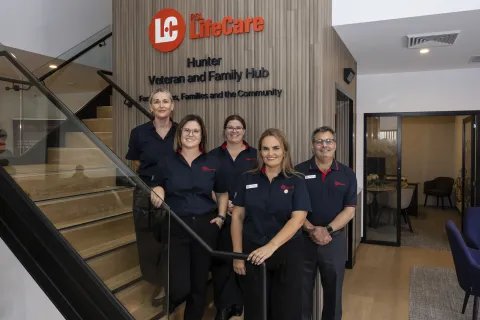
Five staff members in uniform standing together near a staircase inside the Hunter Veteran and Family Hub, with signage on the wall behind them.

The Hunter Veteran and Family Hub is a welcoming, non‑clinical space where veterans and their families can easily access support, connection, and guidance.

Welcome to the Hub 

RSL LifeCare Limited is an Australian not‑for‑profit organisation committed to supporting current Australian Defence Force (ADF) members, veterans, and their families at every stage of life. Its services span four key areas: veteran services, residential aged care, retirement living, and home care. 

The Hunter Veteran and Family Hub offer a welcoming central point of access to coordinated, non‑clinical services including DVA claims support and advocacy, employment and transition assistance and social connection activities. 

A holistic approach to supporting veterans and families of veterans  

The Hunter Veteran and Family Hub provide a coordinated, whole-of-person approach to support—helping veterans and families of veterans strengthen their financial wellbeing, mental health, and physical wellbeing in one place. 

At the Hub, you can access personalised wellbeing support tailored to individual needs, including practical assistance and guidance to help you navigate life’s challenges.  
 
The on-site services bring together a range of supports in one welcoming location, making it easier to access the help you need, when you need it.  

What’s available to you  

  • Advocacy support is available to help with DVA claims and entitlements, ensuring you understand your options and feel confident in the process. 
  • a range of regular activities, events, and community programs, we help you build social connections, reduce isolation, and stay engaged with others who understand your experiences. 
  • Wellbeing support including financial assistance and support coordination  

 
Through RSL Lifecare, we can help connect you to:  

  • The RSL Employment Program for employment assistance and resources to help you transition into or progress within the workforce. 
  • Referrals for homelessness and housing support through Homes for Heros and subsidised rental assistance through the Rent Choice Veteran Program  
  • Open Arms Outreach and mental health supports  

How to find us   

Address: 48 Ken Tuban Drive, Maitland NSW 2320

Opening Hours: Monday to Friday 9:00am to 5:00pm

Phone: (02) 4908 9950

Website: Hunter Veteran and Family Hub - RSL LifeCare

Email: huntervfh@rsllifecare.org.au
  
The Hunter Veteran and Family Hub’s social connection and community programs are advertised through the events and activities page and social media: Hunter Veteran and Family Hub | Activities & Events 

The Hub is wheelchair accessible.

Factsheet
  • Social Support and Connection
  • Health and Wellbeing
  • Family, Children and Caring
Off
7
8
9
10
11
12
104

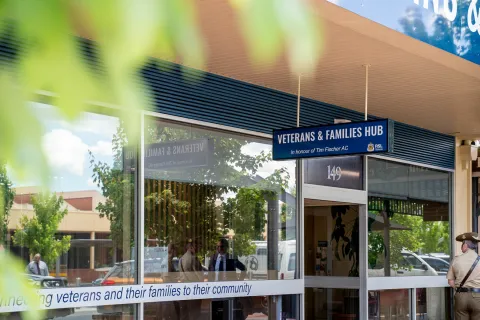
The Veterans & Families Hub in Honour of Tim Fischer AC (Wodonga)

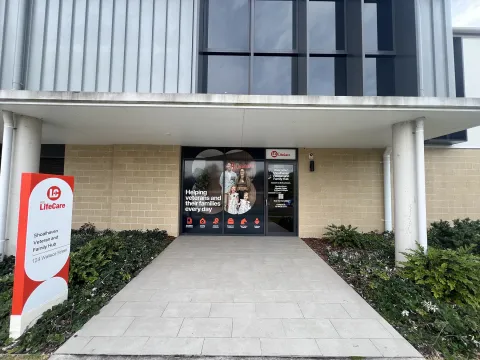
Front of the Wodonga Veterans and Families Hub building with a sign above the entrance, large glass windows, and a pathway leading to the door.

The Hub operates as a single point of access for wellbeing support, advocacy, service navigation and peer connection.

Welcome to the Hub   

The Returned & Services League of Australia (Victorian Branch) Inc. (RSL Victoria) is a registered charity and ex-service and member-based organisation first established in 1915, with primary objectives to provide: 

  • Support to veterans and their families 
  • Acknowledgement of Australian Defence Force service 
  • Encouragement of conversation and mateship between those who have served and their communities 
  • Appropriate commemoration and remembrance honouring the service and sacrifice of our veterans.   

Co-funded through the Australian Government’s Veterans’ and Families’ Hub program, RSL Victoria has established a Veterans and Families Hub in Wodonga.
 
The Wodonga Veterans and Families Hub provide locally-based, community‑focused support for current and former Australian Defence Force members and their families in the Indigo Valley, Riverina and Murray regions.  

The Hub operates as a single point of access for wellbeing support, advocacy, service navigation and peer connection. It provides referral to specialist health and community services. Through strong partnerships with ex‑service organisations, local service providers, and government agencies, the Hub improves access to coordinated care, encourages early and stigma‑free help‑seeking, and supports the mental, physical, and social wellbeing of veterans and families living in this important regional defence community. 

What supports are available to you on site  

  • The Hub works with Wodonga TAFE to facilitate Recognition of Prior Learning (RPL) support and the Veteran Skills Recognition Program. 
  • The RSL Active program is designed to support the physical health and wellbeing of veterans and their families 
  • Wodonga TAFE Massage Therapy Students provide free massages. 
  • The  Hub offers a range of social connection opportunities including yoga, walking groups, peer support groups and much more. 
  • Advocacy support is available by trained volunteer advocates and RSL Victoria staff. 

The hub can also help connect you by:  

  • Referrals to emergency housing options and the development of longer-term housing plans. 
  • Referrals to Financial Advice services to assist with longer-term financial stability.  

How to find us 
 
For more information, please visit:

Address: 149 High Street, Wodonga VIC 3690

Opening Hours: Monday to Friday 9:00am to 4:00pm

Phone: (03) 9655 5597 

Website: The Veterans & Families Hub Wodonga In Honour Of Tim Fischer AC – RSL Victoria

Email: veterancentral@rslvic.com.au 

The Hub is wheelchair accessible.
 

Events Calendar: Facebook Event Listings 

RSL Active Events: RSL Active Calendar 

Factsheet
  • Education and Skills
  • Employment and Meaningful Activity
  • Social Support and Connection
  • Health and Wellbeing
Off
7
8
9
10
11
12
104

Changing jobs

Two people shaking hands in a covered outdoor walkway, with one carrying a shoulder bag and the other holding a folder or notebook.

Changing jobs can be a positive step at any time in life. Knowing your skills and strengths helps with job fit. 

Changing jobs can be a positive step at any time in life. For veterans, changing jobs may happen when leaving Defence, when health or family needs change, or interest in finding a new kind of work.  

You may want more flexibility, better work–life balance, or a job that better fits your interests and values. Changing jobs can support your wellbeing, help you feel more stable, and help you plan for the future.  

When changing jobs might be right for you  

People change jobs for many reasons. You may want to make a change if:  

  • Your current job no longer suits your skills, interests or needs  
  • You are feeling stressed, burnt out, or your health is being affected  
  • You want work that is more flexible or better for family life  
  • You want to learn new skills or try a different kind of work  
  • Your transition, posting history, or family responsibilities have changed  

For some veterans, changing jobs may mean using skills from military service in civilian jobs, or finding work with more independence and balance.   

When changing jobs is not your choice  

For some former ADF members, changing jobs is not planned. Being discharged from Defence for medical or administrative reasons can mean leaving earlier than expected, or in a way that feels sudden and outside your control.  

An involuntary discharge can affect more than your job. It can also affect your:  

  • Identity and sense of purpose  
  • Confidence and motivation  
  • Financial security  
  • Physical or mental health  
  • Family stability and future plans  

It is common to feel unsure, frustrated or sad, especially if the change was unexpected or linked to injury or illness.   

What to do next after involuntary discharge  

If you are changing jobs after an involuntary discharge, it can help to take one step at a time.  

You could:  

  • Focus first on your health and wellbeing  
  • Look at work options that suit what you can manage right now  
  • Think about flexible, part-time, or short-term roles  
  • Get support to understand how your skills can be used in civilian jobs  
  • Give yourself time to adjust to a big change   

There is no one right path, your next steps may be different from what you first planned, and that is okay.  

Things to consider before changing jobs  

Before making a change, it may help to think about:  

  • What you enjoy in your current role, and what isn’t working  
  • Your financial situation and income needs  
  • The type of workplace culture that suits you  
  • Your health, wellbeing and energy levels  
  • How work fits with family responsibilities or caring roles   

Taking time to plan can help you feel more certain and move into a job that better supports your wellbeing.  

Your skills and strengths  

You may already have strong skills that you can use in different jobs. These may come from:  

  • Defence service or transition experience  
  • Previous civilian employment  
  • Education, training or volunteering  
  • Managing family or caring responsibilities  

Skills like leadership, teamwork, problem-solving, adaptability and communication are useful in many jobs. Knowing your strengths, and being able to talk about them, can help you feel more confident when looking at new roles.  

Exploring new job options  

If you are thinking about a change, you might:  

  • Research industries or roles that interest you  
  • Speak with people working in roles you’re curious about  
  • Explore short courses or training to build new skills  
  • Consider part-time, flexible or remote work options  
  • Look at roles outside your previous field or sector  

Changing jobs does not always mean starting over. Many people make the change slowly or move into work that builds on the experience they already have.   

Support when changing jobs  

Changing jobs can be stressful, especially if there is uncertainty or financial pressure.  

Support may be available to help you:  

  • Work out your career goals  
  • Understand how to use employment services and systems  
  • Build confidence and manage stress during change  
  • Balance work decisions with your health and family needs  

Getting support   

All ADF members separating from the ADF will receive support from a Transition Support Officer.

The Defence Force Transition Program includes career transition coaching for up to 24 months after separation and specific programs to support those separating from the ADF.
  
The Veteran Employment Program website also has tips and guides in finding civilian employment and support employers who are committed to recruiting veterans.  

Factsheet
  • Financial Wellbeing
  • Education and Skills
  • Employment and Meaningful Activity
Off
7
9

Finding work after service

A person wearing a hard hat and high-visibility vest standing at the back of a work vehicle, holding the tray.

Identify your skills and help translate your ADF experience into civilian language. 

There is no one right way to go back to work after service. You may be: 

  • looking for your first civilian job 
  • changing careers 
  • building new skills  
  • easing back into work over time 

Veterans often have strong skills in leadership, teamwork, communication, problem-solving and adapting to change. A common challenge is explaining these skills in a way civilian employers understand. You can Identify your skills and help translate your ADF experience into civilian language. 

Military Skill recognition

The ADF Transition and Civilain recognition project facilitates ADF members having their military skills recognised through a national qualification as part of their transition to the civilian workforce.

ADF Transition and Civil Recognition provides transitioning members, and those who have transitioned within 24 months, the opportunity to have skills recognised through recognition of prior learning (RPL), and accredited where possible. 

Programs and services that can help 

Veteran Employment Program 

The Veteran Employment Program (VEP) has resources to support veterans and partners to secure employment and progress in their careers, understand the civilian workplace, identify and build skills and find a job. 

Through the Veteran Employment Commitment veterans and partners can identify employers that have policies and practices in place to support their employment, search for these employers by filtering by location and industry on the VEP website. 

VetPaths  

The VetPaths program aims to highlight Australian Public Service (APS) employment opportunities to veterans and provides a structured support system, including resources, mentoring and development opportunities, once employed.  

Future Women Jobs Academy 

The Future Women Jobs Academy program provides support for women and gender diverse people who have served in the ADF as well as partners of veterans, to build confidence and shaping civilian careers. 

Defence Force Transition Program (DFTP)  

The Defence Force Transition Program offers advice, support and programs to assist with finding civilian employment. Services are available for up to 24 months through your local Transition Centre. The DFTP includes career transition coaching and career focussed modules that cover interview and negotiation skills, resume and job search and connecting participants to jobs

Support for Employment Program 

The Support for Employment Program is for veterans who are between 12 months and five years post‑separation. If eligible, you can apply for this program through MyService by clicking the Services and Benefits tile.  

Self-employment support 

Programs such as King’s Trust Australia’s Enterprise Program and Workforce Australia Self-Employment Assistance can support for veterans who are exploring self-employment or business pathways. 

Support for partners 

Work changes can affect the whole family. Partners may also need help to: 

  • find work 
  • change jobs  
  • rebuild confidence after transition or relocation 

You can: 

  • explore the Veteran Employment Program resources for partners for practical employment advice 
  • use the existing partner-friendly employer search link to find organisations that support veteran and partner employment 
  • access the Partner Employment Assistance Program (PEAP) to help with employment costs (up to $1,500 per financial year for eligible ADF member’s partners in Australia)

Thinking about money 

Changes to work or income can affect your financial situation.  It can help to review your finances early and understand what support is available. 

You can: 

If things feel overwhelming 

Stress about work can affect your mental health, confidence and sense of stability. Support is available.  

  • Open Arms provides free and confidential counselling and wellbeing support for veterans and families.  
  • Lifeline and Beyond Blue are also available for immediate emotional support. 
Factsheet
  • Employment and Meaningful Activity
Off
7
9

Finding meaningful activities 

Two people kayaking on calm water, paddling side by side with trees reflected in the surface.

Meaningful activities can help veterans and families build routine, connection and a sense of purpose during transition.  

Meaningful activity can play an important role in wellbeing during transition.  

Purpose and connection do not have to come from paid work or formal study. For many veterans and families, volunteering, sport, peer support, community activities and creative interests can help build routine, confidence and belonging. 

Meaningful activity, sport and volunteering 

Meaningful activity looks different for everyone. It might be:  

  • mentoring others 
  • joining a local sporting club 
  • volunteering in your community 
  • reconnecting with hobbies 
  • exploring creative activities such as art programs 
  • supporting a cause that matters to you 

These activities can create structure and social connection. They can be especially helpful when work or identity feels uncertain. For example: 

  • Mentoring can be a good way to share your experience and support others. The Defence Force Transition Program includes a Becoming a Mentor module to help veterans build these skills. 
  • Sport, movement and recreation can support wellbeing. See the Body movement page for ideas to stay active in ways that suit your health, energy and interests. 
  • For children, the Sport for kids page has practical tips to help children stay active, connected and settled during change. 
  • Volunteering can help you stay connected, use your skills and support a cause that matters to you. Volunteering Australia can help you explore volunteer roles and find opportunities that suit your interests and availability. 

Connection through shared experience 

For some people, meaningful activity also includes connecting with others who understand military and family life. This might include university-based groups such as the Australian Student Veteran Association, which connects veterans studying at university with others who share ADF experience. 

Peer support can reduce isolation, build confidence and help people feel understood. Open Arms Community and Peer Program offers peer support, community engagement and group programs for veterans and families. 

Veterans’ and Families’ Hubs may also offer local activities and groups. They can help you connect with services, community and other veterans and families. See the Veterans’ and Families’ Hubs page to learn more. 

Taking small steps toward purpose 

You do not need to have a complete plan to start building meaningful activity into your life. 

Small steps can make a real difference. You could try a new activity, attend a community event, join a group, or make time for something you enjoy. Over time, these experiences can help build routine, confidence and connection. 

Further support and resources 

If you would like more ideas or support, these Australian resources may help you explore activities, connect with others and find local services. 

National and government-backed resources 

  • Veterans’ and Families’ Hubs – DVA-funded hubs across Australia that can connect you with local wellbeing support, social connection, advocacy, health and other services. 
  • Open Arms Community and Peer Program – national peer support and community engagement for veterans and families, including group programs and lived-experience support. 
  • Volunteering Australia – practical information about volunteering and links to volunteer opportunities across Australia. 
  • Healthdirect– Australian Government health information about building wellbeing, staying connected and doing things you enjoy as part of everyday mental health care. 

Veteran-specific organisations 

  • Soldier On – a national veteran organisation that offers activities, social connection, health and wellbeing support, learning and employment pathways for current and ex-serving members and their families. 
  • RSL Queensland – offers veteran and family wellbeing centres, social connection activities, peer-led wellbeing programs, and free online learning to support health, routine and connection. 
  • Mates4Mates – provides social connection activities, family events, peer support, physical rehabilitation and wellbeing programs for veterans and families affected by service. 
Factsheet
  • Employment and Meaningful Activity
  • Meaning and Spirituality
  • Social Support and Connection
  • Health and Wellbeing
Off
7

Families in transition

A family hiking together along a narrow path on a grassy hillside.

Transition can affect the whole family, including routines, relationships, finances and future plans.

Transition affects the whole family, not just the person leaving the ADF. Partners, children, carers and other loved ones can all be affected. 

Family life can change in many ways during transition. Routines, roles, finances, communication and future plans may all shift. Paying attention to relationships during this time can help your family feel more stable and supported. 

Checklist 

The printable ‘Families in Transition’ checklist can help your family plan next steps, keep track of tasks, and decide what support to follow up during transition.   

Use the checklist in the way that works best for your family. 

  • Start with one or two items that feel most important right now. 
  • Work through the checklists together if that feels helpful. 
  • Come back to the lists as your family’s needs change. 
  • Use the page sections below to find more information about each topic. 

How transition can affect families 

Families may notice changes in routines, communication, confidence, mood or energy. Some people feel closer during transition. Others feel pressure, uncertainty or fatigue as everyone adjusts in different ways. These responses are common. 

You may have practical questions during this time, such as: 

  • Will my child need to change schools if we move after a parent leaves the ADF? 
  • What help might we need at home if someone in our family is separating for medical reasons? 
  • Will changes to work hours affect our childcare subsidy? 
  • How can we stay connected with friends, local services and community activities if Defence is no longer part of daily life? 

These questions are normal. Talking about them early and making plans together can help your family feel more prepared. 

You may find it helpful to read about changing schools, home care and aged care services, childcare support, and ways to stay connected with community and peer support. 

Parenting through transition 

Children may respond to transition in different ways depending on their age, personality and what else is changing around them. 

A big life change can be confusing for children. It may help to: 

  • keep routines where you can 
  • let the school know what is happening 
  • ask if a Defence School Mentor or similar support person can help for a while 

If your family is moving or settling into a new area, the new community checklist can help you work through practical next steps. 

The sport and activities page for children may also help your child stay active, build confidence and feel part of a community during change. 

Strengthening relationships during change 

Small, honest conversations can help. Talk about what is changing, what feels hard, and what support might help right now. 

Not every conversation needs to solve a problem. Sometimes being heard is a helpful first step. 

You can find relationship and family wellbeing support through Open Arms, chaplaincy services, Veterans’ and Families’ Hubs, and community services in the Self-Service Navigation Catalogue. 

Looking after each other 

Looking after each other can include small practical actions, such as: 

  • sharing school drop-off 
  • helping with meals 
  • updating important services with your new address after a move 

Small actions can make change feel more manageable. 

If caring responsibilities are increasing, the carer burnout support page offers practical guidance on recognising pressure early and finding support. 

Veterans’ and Families’ Hubs can help families connect with local services, support options and community activities. You can learn more about what hubs offer on the Veteran and Family Hubs information page. 

You do not need to wait until relationships are under pressure to seek support. Reaching out early can help families stay connected and manage change with more understanding and care. 

Need support now?  

Support is available if your family needs help during transition. You can contact family wellbeing and counselling services, local community supports, or domestic and family violence services. You do not need to wait for a crisis to ask for help. 

Domestic and family violence support 

If you or someone you know is experiencing domestic or family violence, confidential help and information are available. 

Read the domestic and family violence support information page for confidential help, safety information and support options. 

Useful websites 

Factsheet
  • Social Support and Connection
  • Health and Wellbeing
  • Family, Children and Caring
On
7
10
12